
In the agricultural production chain, fertilizers and animal feed are essential inputs, and the safety of their packaging directly affects crop yield, product quality, and the healthy development of the livestock industry. However, many people overlook one seemingly insignificant component—the bag closing thread. In reality, it plays a critical role. It is not just a simple tool for sealing bags, but the true “lifeline” that ensures safe transportation and storage of fertilizers and feed.
This article takes a closer look at why fertilizer and feed packaging must rely on high-strength polyester bag closing thread. From chemical corrosion and UV aging to extreme tensile forces, we’ll explain the science behind it and the real needs of the industry.
I. The Invisible Enemies of sewing thread for bags
Fertilizers—especially nitrogen and phosphate fertilizers—often contain acidic or alkaline substances. When these chemicals come into long-term contact with sewing thread for bags, they gradually cause corrosion. Over time, ordinary thread becomes brittle and eventually breaks, leading to fertilizer leakage. This not only results in economic losses but can also contaminate soil and water, causing irreversible environmental damage.
The same risk exists in feed packaging. Raw materials such as fish meal and soybean meal easily absorb moisture and release acidic gases, which also threaten the durability of stitching thread for bags. Although this chemical corrosion happens slowly, the cumulative effect is enough to significantly reduce strength and flexibility. During transport or storage, broken stitches can cause feed spillage or spoilage, directly impacting farming efficiency.
II. Sunlight Exposure in Outdoor Storage
After production, fertilizers and feed often go through extended periods of storage and transportation before reaching end users. Many packages are stacked outdoors and exposed directly to sunlight. Ultraviolet (UV) radiation is a powerful natural aging factor that can seriously damage bag sewing thread.
Under continuous UV exposure, ordinary bag sewing thread undergoes molecular degradation. The thread becomes stiff, brittle, and eventually snaps. In just a few months, this aging process can significantly reduce performance, making packaging prone to seam failure during handling and transport.
In contrast, polyester bag closing thread is specially treated with UV-resistant additives. This allows it to maintain flexibility and tensile strength even after long-term exposure to sunlight. In many cases, it can perform reliably for several years, greatly extending packaging lifespan and reducing cargo loss and safety incidents caused by broken seams.
III. Extreme Tensile Stress: From Light Loads to Heavy Pressure
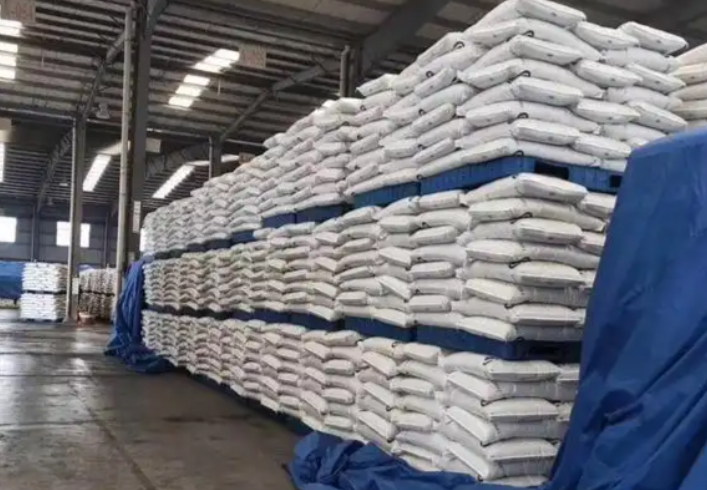
Fertilizer and feed bags are designed to carry heavy loads. A single fertilizer bag can weigh up to 50 kg, and when stacked ten layers high, the total load can reach half a ton. Under such pressure, the stitched seams must withstand both vertical tension and horizontal tearing forces, placing extremely high demands on the polyester bag sewing thread.
Generally speaking, the breaking strength of the polyester bag sewing thread should be at least twice the strength of the bag material itself. This ensures that seams will not fail during stacking or transportation. Ordinary thread often cannot meet this requirement, while high-strength thread achieves significantly improved tensile performance through advanced materials and optimized structure.
Double-ply and triple-ply threads (twisted from two or more strands) are much stronger than single-ply options, offering higher tensile resistance and further enhancing packaging reliability.
IV. Application Scenarios and How to Choose the Right Thread
High-strength stitching thread for bags is widely used throughout the fertilizer and feed packaging process, from production to logistics. It is especially indispensable in export packaging and automated bagging lines.
For export fertilizers, packaging standards are much stricter. In addition to basic strength requirements, seams must remain intact during long-distance transportation and under harsh climate conditions. High-strength bag closing thread, made with specialized materials and processing techniques, meets these demands and provides reliable protection for export goods.
In automated packaging lines, high-speed sewing machines place very high demands on bag closing thread. The thread must be uniform and free of burrs to avoid machine jamming and production delays. As a result, low-elongation, high-strength thread has become the mainstream choice, ensuring smooth, efficient, and stable stitching performance.
For fertilizer manufacturers, feed distributors, and packaging equipment suppliers, choosing high-strength sewing thread for bags is not just about product quality—it’s about responsible and safe production. The right thread reduces leakage risk, minimizes cargo loss, improves equipment compatibility, and ultimately delivers real economic and social benefits.


